.png)
Technology transfer is often one of the first phases of onboarding a project to a contract manufacturing organization (CMO), and the quality of that transfer often sets the tone for the success of the project and the collaboration that follows.
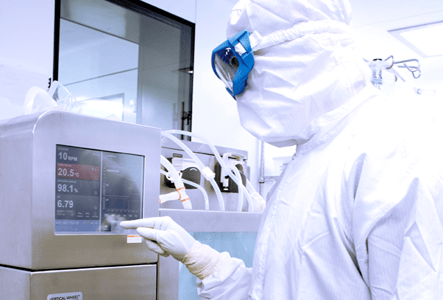
Biopharmaceutical and cell therapy manufacturing is shaped by diverse product portfolios, compressed timelines, complex biological systems, and demanding transfer requirements. Because CMOs support clients with a wide range of process needs and applications, an efficient tech transfer is not simply helpful; it is essential.
Many factors contribute to an effective tech transfer. However, the most critical is open, transparent communication and information sharing. Without that foundation, every other aspect of the transfer becomes less efficient and more difficult to execute.
Biotech companies working with a CMO are looking for a manufacturing partner that not only produces their product, but also helps guide the program from early-stage development into clinical or commercial manufacturing.
What Is Tech Transfer?
Tech transfer is the process by which knowledge, procedures, and technologies developed in one organization are transferred to another for further development or manufacturing. ICH Q10 identifies technology transfer as one stage within the pharmaceutical product lifecycle, following pharmaceutical development.
Outcomes of a Successful Tech Transfer
A successful tech transfer typically results in several core deliverables:
-
Batch Record
-
Bill of Equipment (BOE)
-
Bill of Materials (BOM)
The first stage of tech transfer includes client onboarding. This often begins with a kickoff meeting and alignment on the deliverables expected from the CMO. Depending on the scope of work, those deliverables may include process optimization or scale-up, a batch record, a Bill of Equipment, and a Bill of Materials.
The timeline for these deliverables depends heavily on the quality and completeness of the materials the client provides to the CMO. These deliverables are not only part of the transfer process; they are also direct indicators of an effective transfer.
At its core, the transfer of relevant documentation and a complete equipment list from the client or IP owner is what determines the efficiency and overall timeline of the engagement.
.png?width=1200&height=300&name=BBGAT%20Blog%20Content%20Ideas%20%20(2).png)
Why Documentation Quality Matters
Many laboratories with promising technologies operate in research and development environments that differ significantly from the regulated requirements of GMP manufacturing. In practice, this often shows up as incomplete documentation of standard operating procedures, critical process steps, or critical materials.
A five-step protocol may appear to capture a process, but if three additional steps exist only as operator knowledge, successful replication becomes far more difficult. This is why strong documentation during development, followed by thorough knowledge transfer to the CMO, is so important.
At this stage, the transfer should include all relevant SOPs, written protocols, and supporting process documents. One step that is often overlooked is a structured discussion with the technical expert responsible for the process. These conversations improve understanding, clarify process needs, and help identify gaps before they create delays. Once the initial documentation package is complete, the process can move into replication and, if needed, optimization in the process development laboratory.
.png?width=1200&height=300&name=BBGAT%20Blog%20Content%20Ideas%20%20(3).png)
Process Knowledge Is as Important as Process Documents
Effective tech transfer is not limited to SOPs, batch records, component records, BOMs, and equipment lists. It must also include the practical knowledge behind the process.
That includes:
- Known pain points
- Steps that require special attention
- Areas in need of support or optimization
- Approaches that have already been tested
- Solutions that have or have not worked
This level of transparency helps the CMO replicate the process more efficiently, avoid repeating unsuccessful efforts, and develop informed solutions within a shorter timeframe.
Conclusion
Once a process can be replicated successfully by the CMO, the next phase of development or manufacturing can begin. For that reason, a successful tech transfer depends on more than document exchange alone. It requires disciplined documentation, clear technical communication, and early alignment on materials, process knowledge, and product quality requirements.
When those elements are in place, tech transfer becomes a structured path to reproducible, manufacturing-ready execution.